Neutral Grassland BNG Units for Sale
Secure off-site Neutral Grassland units that align with your Biodiversity Metric, trading requirements and development location.
Purchasing these required units helps fulfil your biodiversity net gain planning conditions and supports your application through the planning process.
Price from
£18,900
per biodiversity unit
Planning compliant
30 years
legally secured BNG delivery.
Purchase increments
0.01 units
flexible purchasing to meet your 10% BNG requirement.
Fast Turnaround
48 hours
Allocation Agreement issued within 48 hours of payment.
CURRENT AVAILABILITY AND PRICING
'Neutral Grassland' Units Available for Development Projects
Neutral Grassland BNG units are available from £18,900 per biodiversity unit.
You can purchase units in increments of 0.01, so the allocation can be matched closely to the shortfall shown in your Biodiversity Metric.
Fixed administration and allocation costs are included separately, which means all fees for necessary compliance documentation is included within the one fee and you won’t be hit with unexpected costs. |
Once we’ve reviewed the habitat requirement, development location and number of units needed, we’ll confirm suitability, availability and the full project cost.
Your BNG unit requirement can be priced within a 5 minuite conversation with one of highly trained Client Managers.
UNDERSTANDING THE REQUIREMENT
Why Does My BNG Assessment Require Neutral Grassland Units?
Your Biodiversity Metric records the habitats affected by the development and identifies the type of off-site units needed to address any remaining shortfall. Neutral Grassland units may be specified where they provide an appropriate match under the metric’s habitat trading rules.
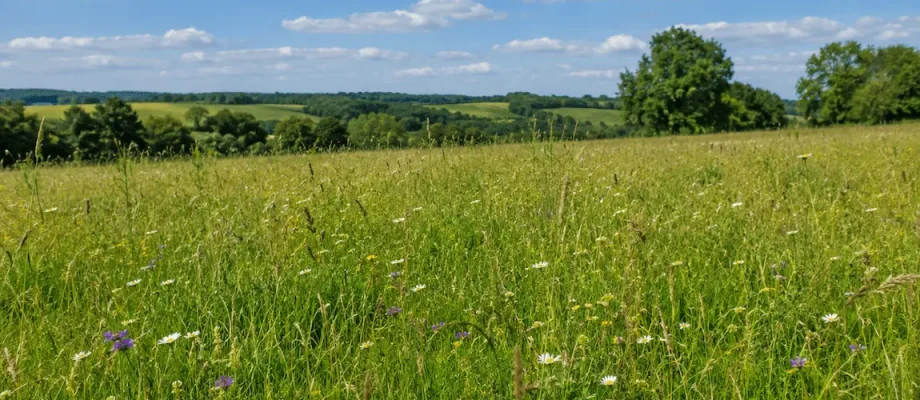
Other Neutral Grassland is a semi-natural grassland habitat made up of a varied mix of grasses and flowering plants. Unlike intensively managed agricultural grassland, it can provide food, shelter and movement corridors for insects, birds and other wildlife.
Its value comes from that variety. When created or enhanced and managed over the long term, Neutral Grassland can support a broader range of species, improve connections between surrounding habitats and deliver measurable biodiversity gain.
Not every biodiversity unit is interchangeable. The habitat classification, distinctiveness, condition and location all influence whether Neutral Grassland units can be allocated to your development and how many units will count towards the requirement.
1
Existing habitat is assessed
The metric records the habitat affected by the proposed development.
2
A shortfall is calculated
On-site measures are accounted for before any off-site requirement is confirmed.
3
Suitable units are allocated
Suitable units are allocated along with all planning compliant paperwork ensuring planning conditions are fulfilled
HABITAT ASSESSMENT
How Neutral Grassland Units Are Assessed
A biodiversity unit is a way of measuring how much ecological value a habitat provides. For Neutral Grassland, the calculation looks beyond the size of the field. It also considers the quality of the habitat, how difficult it is to create and how long it will take to reach its intended condition.
This is necessary because two fields of the same size can support very different levels of biodiversity. One may contain a varied mix of grasses and flowering plants, while another may be dominated by only a few vigorous species.
An ecologist assesses the grassland by looking at features such as:
• the range and spread of plant species;
• the balance between grasses and flowering plants;
• variation in vegetation height;
• the amount of bare ground;
• the presence of scrub, bracken or invasive plants;
• signs of intensive grazing, fertiliser use or physical damage.
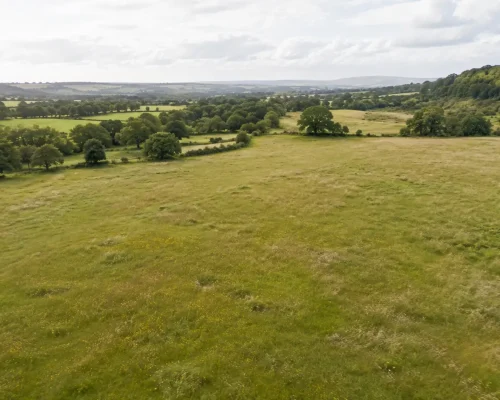
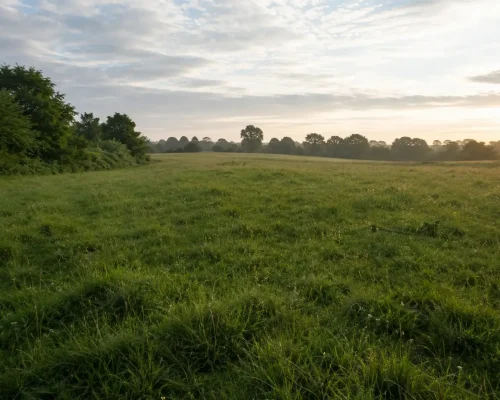
These features help show whether the grassland is functioning as a diverse habitat or simply appears green from a distance.
The Statutory Biodiversity Metric then combines the habitat’s area, type and condition with other factors. These include its importance within the local landscape, the time needed to reach the target condition (poor, moderate, good).
This prevents a newly created habitat from being treated as though it already has the value of established grassland. The final unit figure represents the biodiversity value expected from the habitat and can then be matched against the shortfall identified for a development.
Habitat type
what is present or being created
Condition
The ecological quality achieved
Area
The extent of the habitat parcel
Location
The final habitat value is influenced by the location of the habitat parcel
CREATION AND MANAGEMENT
How Neutral Grassland Is Created and Managed
Creating Neutral Grassland is a long-term ecological process shaped by the condition of the land and the grassland community it is expected to support.
The work begins with an assessment of the existing sward, soil fertility, drainage and previous land use. This helps establish whether the site can be enhanced from its current condition or whether more extensive preparation is needed to create a varied mix of grasses and flowering plants.
On land previously managed for intensive agriculture, high nutrient levels often favour coarse, fast-growing grasses. These can crowd out the slower-growing species that give Neutral Grassland its ecological value. Establishment work may therefore include stopping fertiliser inputs, reducing dominant vegetation, creating areas of open soil and introducing an appropriate seed source or green hay.
As the grassland develops, the management is tailored to the target condition.
Cutting and grazing are timed to allow plants to flower and set seed, while removing cut material helps prevent nutrients from building up again. Scrub, invasive plants and overly dominant species are controlled before they reduce the diversity of the sward.
Ecologists monitor the balance of grasses and flowering plants, vegetation structure and other condition indicators over time. Where the habitat is not progressing as expected, the management can be adjusted.
This combination of site preparation, grassland establishment, specialist management and ecological monitoring supports the biodiversity value attached to each unit. It is designed to create and maintain a functioning Neutral Grassland habitat throughout the legally secured period, rather than simply maintaining the appearance of a field.
Establish
Prepare and develop the required plant community.
Manage
Apply planned cutting, grazing and vegetation control.
Monitor
Record condition and progress against habitat objectives.
Adapt
Adjust management where monitoring identifies a need.
LONG-TERM DELIVERY
Secured, Managed and Monitored for at Least 30 Years
Each unit is backed by habitat on land owned and managed by BNG Solutions UK. We remain responsible for the conservation covenant, ecological oversight, ongoing management and monitoring required to deliver the habitat for at least 30 years.
These responsibilities, and the associated long-term costs, remain with us.
THE PURCHASE PROCESS
From Metric Review to Completed Allocation
Send your metric
Provide the development location and unit requirement.
Suitability review
Habitat type, spatial rules and availability are checked.
Confirm allocation
Pricing, documentation and allocation details are agreed.
Complete and register
The units are allocated to the development and DEFRA registered.
What We Need to Confirm Your Allocation
To carry out an initial review, we will usually need your completed Biodiversity Metric, development postcode and the number of Neutral Grassland units identified. Where available, you can also send your Biodiversity Gain Plan and any relevant planning correspondence.
If you have not had a BNG survey we can have an Ecologist come out from our partner company ProHort Ltd and survey the land, providing you with the needed BNG metric required for plannig permission. From this we can then provide a quote for any BNG units you require.
Neutral Grassland BNG Units FAQs
Neutral grassland BNG units are off-site area habitat units generated by creating or enhancing neutral grassland on a registered biodiversity gain site. They can be allocated to a development where the Biodiversity Metric identifies a compatible habitat-unit shortfall that cannot be met entirely through the development’s proposed on-site measures.
Yes. Neutral grassland BNG units are currently available through BNG Solutions UK, subject to the number of units required, the development location and compatibility with the completed Biodiversity Metric. Availability is checked before any purchase or allocation is agreed.
Send us your completed Biodiversity Metric and development location. We will review the habitat shortfall, unit type, trading rules and spatial factors before confirming whether neutral grassland BNG units are suitable and how many units would need to be allocated.
No. Neutral grassland units cannot automatically be used for every BNG shortfall. They provide area habitat units and cannot replace hedgerow or watercourse units. Compatibility also depends on the habitat type and distinctiveness recorded in the Biodiversity Metric, so suitability must be confirmed before purchase.
Neutral grassland BNG units are currently available from £21,600 per biodiversity unit. The final cost depends on the number of units required. Fixed administration, registration and allocation costs are quoted separately because these costs do not reduce proportionately when a small fraction of a unit is purchased.
Yes. Neutral grassland BNG units can be purchased in increments of 0.01 units, allowing the allocation to be matched closely to the shortfall shown in the Biodiversity Metric. For example, 0.30 units would cost £6,480 at the current unit rate, before any fixed administration and allocation charges.
Yes. The Statutory Biodiversity Metric considers the relationship between the development and the off-site biodiversity gain site. The development location must therefore be reviewed before the final unit requirement can be confirmed. A location-related adjustment may mean that more off-site units are needed to satisfy the calculated shortfall.
The purchase provides the agreed number of neutral grassland units for allocation to your development. We also support the allocation agreement, registration requirements and the information needed to evidence the off-site provision within the Biodiversity Gain Plan. Any fixed administration and allocation charges will be identified clearly within the quotation.
BNG Solutions UK remains responsible for the ecological delivery, management and monitoring of the neutral grassland in accordance with the habitat management plan and legal agreement. The purchaser does not become responsible for carrying out routine habitat works or monitoring the land after the units have been allocated.
The off-site neutral grassland will be legally secured and managed for a minimum of 30 years. BNG Solutions UK retains responsibility for delivering the agreed habitat outcomes throughout the required management and monitoring period.
We review the completed metric, development location and unit requirement to determine whether the available neutral grassland units are suitable. If they are compatible, we confirm availability, the number of units required, the unit cost and any fixed charges before progressing to purchase and formal allocation.
Please provide your completed Biodiversity Metric, the development address, the local planning authority and the number and type of units required. A planning reference and any relevant submission deadlines are also helpful where available. This allows us to assess suitability and provide a more accurate response without unnecessary delays.
START WITH YOUR BIODIVERSITY METRIC
Check whether Neutral Grassland units are right for your development
Send the metric, development location and required number of units. Our team can review suitability and confirm current availability before you commit.