Hedgerow BNG Units for Sale
Our Hedgerow BNG units provide an off-site option for developments where the Biodiversity Metric identifies a requirement for additional linear habitat value.
Purchasing the required units helps fulfil your biodiversity net gain planning conditions and supports your application through the planning process.
Price from
£28,240
per biodiversity unit
Planning compliant
30 years
legally secured BNG delivery.
Purchase increments
0.01 units
flexible purchasing to meet your 10% BNG requirement.
Fast Turnaround
48 hours
Allocation Agreement issued within 48 hours of payment.

CURRENT AVAILABILITY AND PRICING
Hedgerow Units Available for Development Projects
Hedgerow BNG units are available from £28,240 per hedgerow unit.
Units can be purchased in increments of 0.01, helping you secure the amount shown within the metric without buying more than the project requires. Smaller allocations also include fixed administration and allocation costs, so the total will not always scale directly from the full-unit price.
Fixed administration and allocation costs are shown separately and do not reduce proportionally for very small purchases.
UNDERSTANDING THE REQUIREMENT
Why Does My BNG Assessment Require Hedgerow Units?
A hedgerow requirement usually appears because the development affects a linear habitat that is measured separately within the Biodiversity Metric.
That separate treatment reflects the role hedgerows play in the landscape. Unlike an isolated patch of grassland or woodland, a hedgerow can connect habitats across a site, providing continuous cover and movement routes for wildlife. Its flowers, fruit, dense woody growth and vegetation at the base can also provide food, nesting opportunities and shelter at different times of year.
The metric therefore protects hedgerow value within its own calculation rather than allowing a loss to be absorbed into the wider area-habitat total. If a hedgerow shortfall is identified, it must be addressed with compatible hedgerow units.
The exact habitat classification matters too. A standard native hedgerow is not automatically equivalent to a hedgerow associated with a bank or ditch, or one containing established trees. Your Biodiversity Metric records the habitat affected and helps establish the type and quantity of units needed to provide an appropriate off-site match.
1
Existing habitat is assessed
The metric records the habitat affected by the proposed development.
2
A shortfall is calculated
On-site measures are accounted for before any off-site requirement is confirmed.
3
Suitable units are allocated
The habitat, location and unit requirement are reviewed before purchase.
HABITAT ASSESSMENT
How Hedgerow Units are Assessed
Hedgerow biodiversity units are calculated using the length of the habitat, rather than its area. However, length is only the starting point. Two hedgerows of the same length can have very different ecological value depending on their structure, condition and the way they function within the wider landscape.
An ecological condition assessment considers features such as:
• the proportion and diversity of native woody species;
• the height, width and density of the hedge;
• whether the woody structure remains continuous along its length;
• the size and frequency of gaps;
• the condition and vegetation at the base of the hedge;
• flowering and fruiting opportunities;
• the presence and quality of adjoining margins;
• signs of excessive cutting, physical damage or other unsuitable management;
• connections with woodland, grassland, ponds and other habitats.
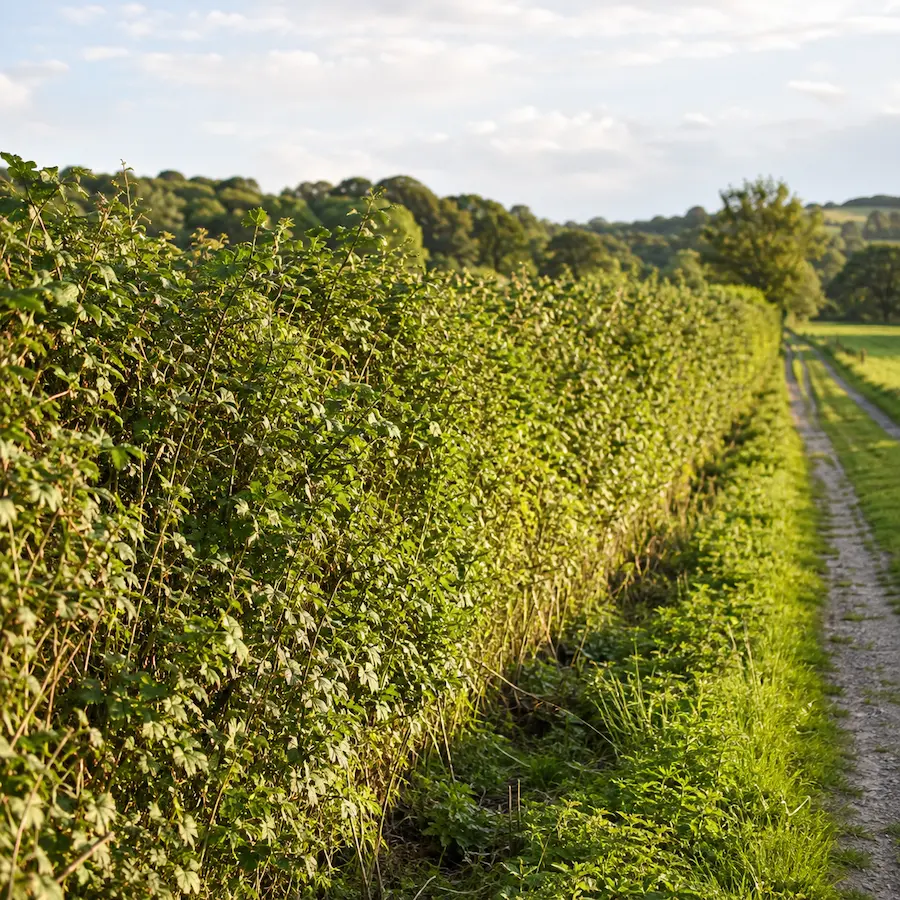
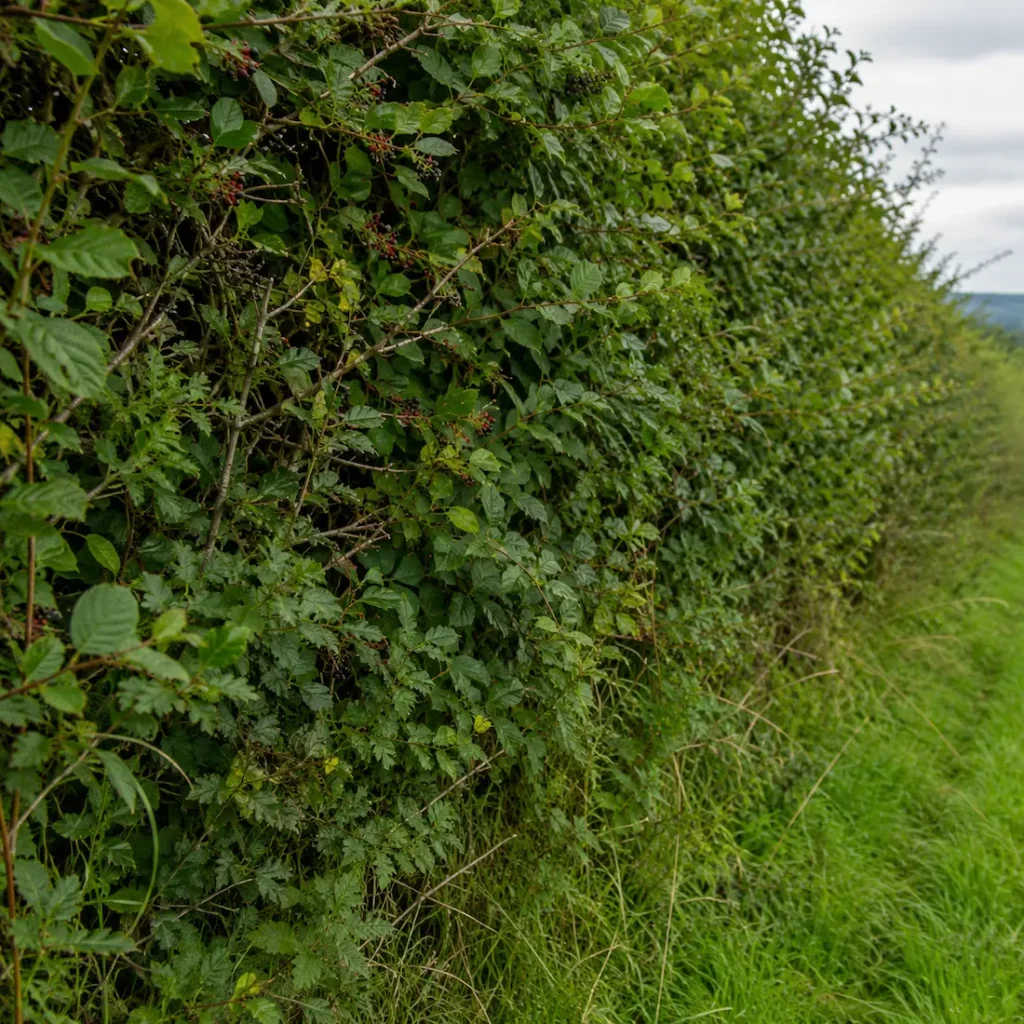
A wide, continuous hedge with a well-developed base and varied structure can provide considerably more habitat than a narrow boundary that is repeatedly cut to the same height or broken by frequent gaps.
The Biodiversity Metric combines the hedgerow’s length, classification, distinctiveness, condition and strategic significance to establish its biodiversity value. Where a new hedgerow is being created or an existing one enhanced, the calculation also accounts for the time needed to reach the target condition and the risk involved in delivering that improvement.
This is why a kilometre of hedgerow does not automatically equal the same number of units everywhere. The calculation reflects the quality and ecological function of the habitat being provided, not simply the length of the boundary.
Habitat type
What is present or being created
Condition
The ecological quality achieved
Area
The extent of the habitat parcel
Location
How spatial rules affect allocation
CREATION AND MANAGEMENT
How Hedgerow Is Created and Managed
Creating a functioning native hedgerow starts with establishing a continuous woody habitat that can mature naturally over time.
Species selection is influenced by the site, soils and surrounding landscape. Depending on local conditions, planting may include native shrubs such as hawthorn, blackthorn, hazel, dog rose, spindle or field maple.
The establishment period is particularly important. Young plants may need protection from browsing animals, competition from surrounding vegetation and accidental damage. Failed plants are replaced where necessary so that permanent gaps do not become established within the hedge.
As the habitat matures, management shifts towards maintaining a strong structure without repeatedly stripping away the features that make the hedge valuable.
This can include rotational cutting, selective gap planting and, where appropriate, traditional techniques such as hedge laying or coppicing. Allowing sections to flower and fruit before cutting provides seasonal food while retaining the dense cover needed by wildlife.
The objective is not to produce a perfectly shaped boundary. It is to maintain a connected, resilient native habitat with enough structural variation to support wildlife throughout the year.
Ecological monitoring then checks whether the hedge is progressing towards the condition used within the Biodiversity Metric. Management can be adjusted if gaps develop, the hedge becomes too narrow, or particular species begin to dominate.
Establish
Prepare and develop the required plant community.
Manage
Apply planned cutting, grazing and vegetation control.
Monitor
Record condition and progress against habitat objectives.
Adapt
Adjust management where monitoring identifies a need.
LONG-TERM DELIVERY
Long-Term Habitat Delivery
Each unit is backed by habitat on land owned and managed by BNG Solutions UK. We remain responsible for the conservation covenant, ecological oversight, ongoing management and monitoring required to deliver the habitat for at least 30 years.
These responsibilities, and the associated long-term costs, remain with us.
THE PURCHASE PROCESS
From Metric Review to Completed Allocation
Send your metric
Provide the development location and unit requirement.
Suitability review
Habitat type, spatial rules and availability are checked.
Confirm allocation
Pricing, documentation and allocation details are agreed.
Complete and register
The units are allocated to the development and DEFRA registered.
What We Need to Confirm Your Allocation
To carry out an initial review, we will usually need your completed Biodiversity Metric, development postcode and the number of Hedgerow with Trees units identified. Where available, you can also send your Biodiversity Gain Plan and any relevant planning correspondence.
Hedgerow BNG Units FAQs
Hedgerow BNG units are biodiversity units generated through the creation or enhancement of hedgerow habitat. Within the Statutory Biodiversity Metric, hedgerows are treated as linear habitats and calculated separately from area habitats such as grassland and woodland, and separately from watercourses.
Off-site hedgerow units can be allocated to a development where the completed Biodiversity Metric identifies a compatible hedgerow-unit requirement that cannot be delivered entirely on-site.
A development can achieve more than 10% in area habitat units and still have a shortfall in hedgerow units. The Statutory Biodiversity Metric does not allow habitat, hedgerow and watercourse unit totals to be combined or converted between one another, and the required net gain applies separately to each relevant unit type.
This means surplus grassland, woodland or other area habitat units cannot simply be used to cancel out a hedgerow deficit.
Hedgerows are entered into the Biodiversity Metric using their centre-line length in kilometres. The metric then considers factors including the hedgerow habitat type, distinctiveness, condition and strategic significance when calculating its biodiversity value.
For new or enhanced off-site hedgerows, the metric also accounts for the risks associated with delivering the proposed habitat outcome.
No. A hedgerow biodiversity unit is a measure of biodiversity value rather than a fixed length of hedge.
Two hedgerows of the same length can generate different numbers of units depending on their habitat classification, condition and other factors within the Biodiversity Metric. The number of metres required therefore cannot be calculated from the unit shortfall alone.
The Biodiversity Metric recognises different types and distinctiveness levels of hedgerow habitat. A standard hedgerow requirement should therefore not automatically be treated as interchangeable with a native hedgerow associated with a bank or ditch, a hedgerow with trees or another hedgerow classification.
The habitat recorded in your completed metric should be checked against the available off-site units and the applicable trading rules before an allocation is agreed.
Potentially. The answer depends on the distinctiveness of the hedgerow habitat being compensated for.
Under the Statutory Biodiversity Metric trading rules, medium-, low- and very-low-distinctiveness hedgerow losses can be replaced with hedgerow units from the same or a higher distinctiveness band. High-distinctiveness hedgerows require the same habitat type or a higher band, while very-high-distinctiveness losses require the same hedgerow habitat type.
We therefore check the exact metric requirement rather than matching units solely by quantity.
A positive overall BNG percentage does not override a hedgerow trading-rule failure. The required hedgerow losses must first be compensated in accordance with the metric’s trading rules before the development can claim Biodiversity Net Gain.
Once the trading rules have been satisfied up to the point of no net loss, additional gain can be delivered using other suitable habitat within the hedgerow module.
No. Hedgerow BNG units cannot be converted into area habitat or watercourse units.
The Statutory Biodiversity Metric maintains separate calculations for area habitats, hedgerows and watercourses. A development with more than one type of shortfall may therefore need to secure different types of off-site biodiversity units.
Yes, but location can affect their value to the development. For area and hedgerow units, the Statutory Biodiversity Metric applies a spatial risk multiplier according to the relationship between the development and the off-site gain site.
We therefore review the development location alongside the available hedgerow units before confirming how many units are required.
Yes. BNG Solutions UK can provide hedgerow units in increments of 0.01 units, allowing an allocation to be matched closely to the requirement identified by the Biodiversity Metric.
The exact quantity should still be confirmed before purchase, particularly where spatial risk or hedgerow trading requirements affect the final allocation.
The best point to secure units is once the completed Biodiversity Metric has identified the off-site hedgerow requirement and the appropriate unit type has been confirmed.
Off-site gains relied upon within a Biodiversity Gain Plan must ultimately be registered and recorded as allocated to the relevant development before the local planning authority can approve that plan.
Send us your completed Biodiversity Metric together with the development location. Where available, also provide the planning reference, local planning authority and any relevant Biodiversity Gain Plan submission deadline.
We can then review the hedgerow shortfall, habitat classification, distinctiveness, trading position and spatial relationship to determine whether the available units are suitable before providing the proposed allocation and quotation.
START WITH YOUR BIODIVERSITY METRIC
Check whether Hedgerow units are right for your development
Send the metric, development location and required number of units. Our team can review suitability and confirm current availability before you commit.