Mixed Scrub BNG Units for Sale
Our Mixed Scrub BNG units provide a practical off-site option where additional habitat value is needed for a development.
Purchasing these required scrub units helps fulfil your biodiversity net gain planning conditions, supporting the approval of your development.
Price from
£20,860
per biodiversity unit
Planning compliant
30 years
legally secured BNG delivery.
Purchase increments
0.01 units
flexible purchasing to meet your 10% BNG requirement.
Fast Turnaround
48 hours
Allocation Agreement issued within 48 hours of payment.
CURRENT AVAILABILITY AND PRICING
'Mixed Scrub' Units Available for Development Projects
Mixed Scrub BNG units are available from £20,860 per biodiversity unit.
Units can be purchased in increments of 0.01, giving you the flexibility to secure the quantity your project actually requires.
The quoted cost includes the necessary administration, allocation and compliance documentation, so the full cost is clear from the outset without additional charges appearing later in the process.
Once we have reviewed the Mixed Scrub requirement, development location and quantity needed, we will confirm the available units and provide a complete cost for the allocation.
Your BNG unit requirement can be priced within a 5 minuite conversation with one of highly trained Client Managers.
UNDERSTANDING THE REQUIREMENT
Why Does My BNG Assessment Require Mixed Scrub Units?
Your Biodiversity Metric records the habitats affected by the development and identifies the type of off-site units needed to address any remaining shortfall. Mixed Scrub units may be specified where they provide an appropriate match under the metric’s habitat trading rules.
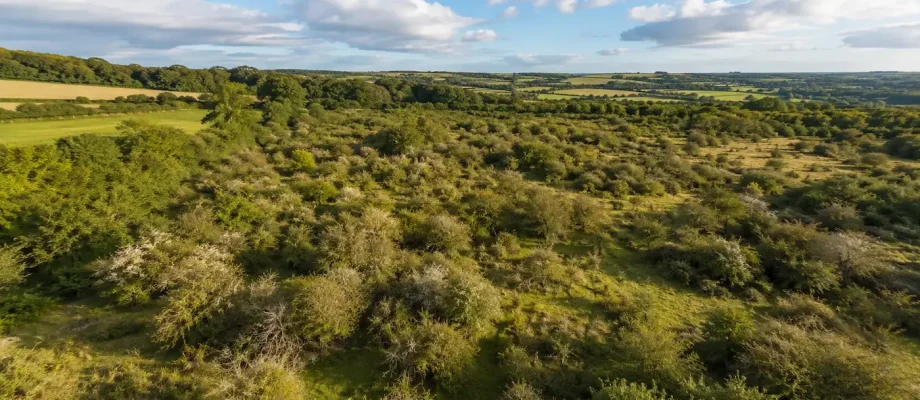
Mixed Scrub is a varied habitat formed from a combination of native shrubs, young trees, grasses and other vegetation. Species such as hawthorn, blackthorn, hazel and dog rose can create a dense, structurally diverse habitat rather than a single uniform block of planting.
That variety is what makes scrub valuable. It can provide nesting habitat, shelter, food and movement routes for birds, insects, small mammals and other wildlife, while also helping connect grassland, hedgerows and woodland across the wider landscape.
Not every area-based unit can address every habitat loss. The classification, distinctiveness, condition and location of the proposed gain will determine whether Mixed Scrub units are suitable for your development and how many can be counted within the metric.
1
Existing habitat is assessed
The metric records the habitat affected by the proposed development.
2
A shortfall is calculated
On-site measures are accounted for before any off-site requirement is confirmed.
3
Suitable units are allocated
The habitat, location and unit requirement are reviewed before purchase.
HABITAT ASSESSMENT
How Mixed Scrub Units are Assessed
Mixed Scrub is assessed as a varied habitat made up of shrubs, young trees, grasses and open ground. Its biodiversity value does not come from the amount of dense vegetation alone. The structure, species composition and condition of the habitat all matter.
An ecologist considers features such as:
• the range of native shrub and tree species present;
• variation in the age, height and density of the vegetation;
• the balance between dense scrub, open areas and grassland edges;
• the presence of flowering and fruiting species;
• the extent of invasive or undesirable plants;
• evidence of damage, heavy browsing or unsuitable management;
• how well the scrub connects with nearby hedgerows, grassland or woodland.
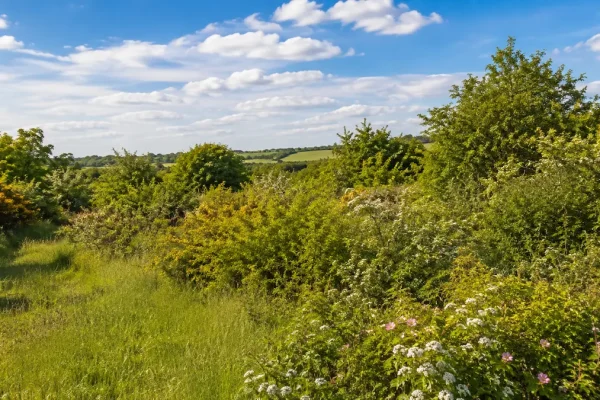
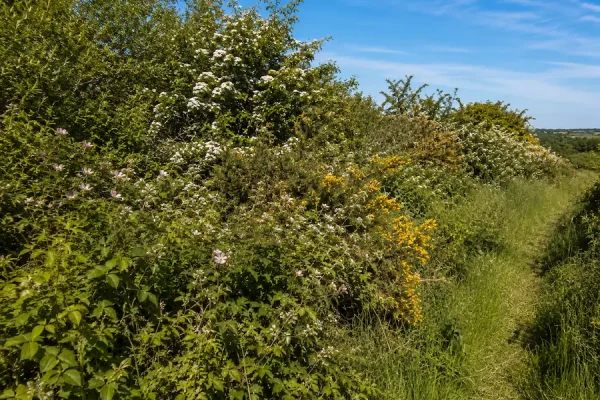
These features show whether the scrub provides several useful habitat layers or has developed into a uniform block with limited ecological variety.
The Statutory Biodiversity Metric combines the habitat area, classification and condition with factors such as strategic significance, time to reach the target condition and delivery risk. Where Mixed Scrub is being created or enhanced, the calculation recognises that the intended structure and species diversity will take time to develop.
The resulting unit value can then be considered against the shortfall identified for a development and the habitat trading rules that apply.
Habitat type
What is present or being created
Condition
The ecological quality achieved
Area
The extent of the habitat parcel
Location
How spatial rules affect allocation
CREATION AND MANAGEMENT
How Mixed Scrub Is Created and Managed
Creating valuable Mixed Scrub involves developing a varied habitat structure rather than allowing an area to become completely overgrown.
The starting point is an assessment of the existing vegetation, soils, drainage and surrounding habitats. This helps determine which native shrubs and young trees are appropriate and where areas of grassland, open ground or scrub edge should be retained.
Species such as hawthorn, blackthorn, hazel, dog rose and field maple may form part of the habitat, depending on the site and local landscape. Planting and natural regeneration can both contribute, but the aim is to avoid creating a single-age, uniformly dense stand.
As the habitat establishes, management helps maintain a mixture of:
• dense shelter;
• flowering and fruiting shrubs;
• young trees;
• sunny edges;
• open ground;
• adjoining grassland.
This variety supports different species throughout the year. Birds may use the denser areas for nesting, while flowering edges provide food for insects and fruiting shrubs support wildlife later in the season.
Without intervention, scrub can become overly dense or gradually develop into woodland. Management may therefore include selective cutting, rotational clearance, protection of young growth and control of invasive species. These measures retain the structural diversity that gives Mixed Scrub its biodiversity value.
Ecological monitoring records how the habitat is developing and whether the agreed balance of species, age classes and open areas is being achieved. The management plan can then be adapted where the scrub is becoming too uniform, too sparse or is moving away from its target condition.
Establish
Prepare and develop the required plant community.
Manage
Apply planned cutting, grazing and vegetation control.
Monitor
Record condition and progress against habitat objectives.
Adapt
Adjust management where monitoring identifies a need.
LONG-TERM DELIVERY
Long-Term Habitat Delivery
Each unit is backed by habitat on land owned and managed by BNG Solutions UK. We remain responsible for the conservation covenant, ecological oversight, ongoing management and monitoring required to deliver the habitat for at least 30 years.
These responsibilities, and the associated long-term costs, remain with us.
THE PURCHASE PROCESS
From Metric Review to Completed Allocation
Send your metric
Provide the development location and unit requirement.
Suitability review
Habitat type, spatial rules and availability are checked.
Confirm allocation
Pricing, documentation and allocation details are agreed.
Complete and register
The units are allocated to the development and DEFRA registered.
What We Need to Confirm Your Allocation
To carry out an initial review, we will usually need your completed Biodiversity Metric, development postcode and the number of Mixed Scrub units identified. Where available, you can also send your Biodiversity Gain Plan and any relevant planning correspondence.
Mixed Scrub BNG Units FAQs
Mixed scrub BNG units are off-site area habitat units generated by creating or enhancing mixed scrub on a biodiversity gain site. They can be allocated to a development where the Biodiversity Metric identifies a compatible habitat-unit shortfall that cannot be met entirely through the proposed on-site measures.
Yes. Mixed scrub BNG units are currently available through BNG Solutions UK, subject to the number of units required, the development location and compatibility with the completed Biodiversity Metric. Availability and suitability are checked before any purchase or allocation is agreed.
Send us your completed Biodiversity Metric and development location. We will review the habitat shortfall, distinctiveness, broad habitat group, trading rules and spatial factors before confirming whether mixed scrub BNG units are suitable and how many units need to be allocated.
No. Mixed scrub units cannot automatically be used for every BNG shortfall. Mixed scrub is an area habitat within the heathland and shrub broad habitat group, and its use must comply with the trading rules shown in the Biodiversity Metric. It cannot replace hedgerow or watercourse units.
Mixed scrub BNG units are currently available from £23,840 per biodiversity unit. The final cost depends on the number of units required. Fixed administration, registration and allocation costs are quoted separately because these costs do not reduce proportionately when only a fraction of a unit is purchased.
Yes. Mixed scrub BNG units can be purchased in increments of 0.01 units, allowing the allocation to be matched closely to the shortfall shown in the Biodiversity Metric. For example, 0.30 units would cost £7,152 at the current unit rate, before any fixed administration and allocation charges.
Yes. The Statutory Biodiversity Metric considers the location of the development in relation to the off-site biodiversity gain site. We therefore review the development location before confirming the final unit requirement. A location-related adjustment may mean that more off-site units are needed to meet the calculated shortfall.
No. Mixed scrub and woodland are separate area habitat types within the Biodiversity Metric, while hedgerows are measured using separate linear units. They are not automatically interchangeable, so the habitat type and trading requirements shown in the completed metric must be reviewed before units are purchased.
The purchase provides the agreed number of mixed scrub units for allocation to your development. We also support the allocation agreement, registration requirements and the information needed to evidence the off-site provision within the Biodiversity Gain Plan. Any fixed administration and allocation charges will be identified clearly in the quotation.
BNG Solutions UK remains responsible for the ecological delivery, management and monitoring of the mixed scrub in accordance with the habitat management plan and legal agreement. The habitat will be secured and managed for a minimum of 30 years, without transferring routine habitat-management responsibilities to the purchaser.
We review the completed metric, development location and unit requirement to determine whether the available mixed scrub units are suitable. If they are compatible, we confirm availability, the number of units required, the unit cost and any fixed charges before progressing to purchase and formal allocation.
Please provide your completed Biodiversity Metric, the development address, the local planning authority and the number and type of units required. A planning reference and any relevant submission deadlines are also helpful where available. This allows us to assess suitability and provide an accurate response without unnecessary delays.
START WITH YOUR BIODIVERSITY METRIC
Check whether Mixed Scrub units are right for your development
Send the metric, development location and required number of units. Our team can review suitability and confirm current availability before you commit.